



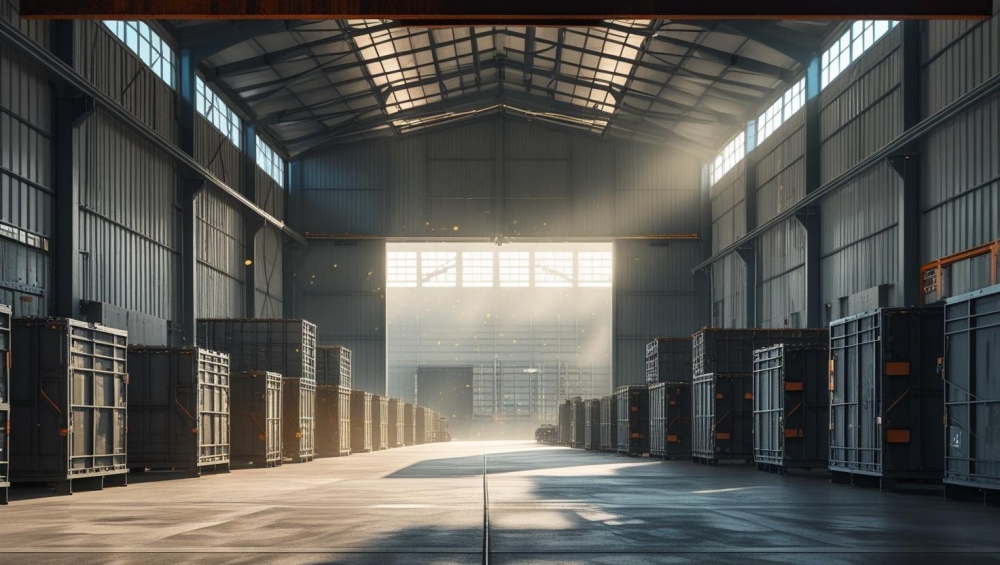
Among industrial buildings, hangars and warehouses are one of the most critical types of structures. Due to their usage and functionality, they require special design and material selection. Durability, wide spans, fast construction times, cost-effective solutions, and sustainability are some of the key factors in these buildings. At this point, steel systems stand out as the most preferred construction material in hangar and warehouse projects.
In this comprehensive guide, we will examine in detail why steel systems are used in hangar and warehouse buildings from technical, economic, and environmental perspectives.
Advantages of Steel Systems in Hangar and Warehouse Structures
1. High Strength and Durability
Steel inherently possesses high tensile and compressive strength. Hangars and warehouses, which require large spans, must maintain structural integrity under heavy loads. Compared to materials like concrete or wood, steel systems offer much higher durability. Additionally, steel structures provide superior resistance against external forces such as earthquakes, wind, and snow loads.
2. Wide Spans and Flexible Design Options
Minimizing the number of columns is crucial for maximizing usable interior space in hangars and warehouses. Steel systems make it easier to create long spans, reducing the number of obstructive columns in storage areas. This facilitates better organization of shelving systems, vehicle parking, and workflow.
3. Fast Production and Assembly Process
Steel components are manufactured with precise measurements in factories and then delivered to the construction site for rapid assembly. This significantly shortens construction time. This advantage is especially critical in projects with urgent deadlines or when rapid operation start-up is required.
4. Lightweight and Economical Solutions
Steel is lighter than many other structural materials, which lowers transportation costs and reduces foundation requirements. The optimized use of materials compared to reinforced concrete leads to more controllable overall project costs.
5. Longevity and Durability
With proper maintenance and corrosion protection systems, steel structures can serve reliably for many decades. Modern protective coatings minimize maintenance needs and enhance structural durability, turning the investment into a long-term economic benefit for businesses.
6. Design Flexibility and Modularity
Steel systems can be easily adapted to various design and functional requirements. Whether it is a wide-open hangar or a multi-story warehouse with shelving, modular and flexible solutions can be produced using steel frames. Future additions or modifications are also easier with steel structures.
7. Environmentally Friendly and Sustainable
Steel is 100% recyclable. In line with sustainability goals in construction, steel structures have minimal environmental impact. Used steel elements can be melted down and reused, helping to conserve natural resources.
8. Fire and Natural Disaster Resistance
With special fire protection coatings, steel structures can be made resistant to high temperatures. Their structural flexibility and strength also provide resilience against earthquakes and other natural disasters, which is another important factor in their preference.
Applications of Steel Systems in Hangar and Warehouse Buildings
-
Airport Hangars: Spacious and unobstructed areas for aircraft maintenance, repair, and parking.
-
Industrial Warehouses: Large, flexible spaces for storing raw materials, products, and machinery.
-
Logistics Centers: Ideal wide-span buildings for fast material flow and efficient space usage.
-
Agricultural Warehouses: Durable and long-lasting structures for product storage and processing.
Disadvantages and Solutions for Steel Systems
Every structural material has advantages and disadvantages. The main concerns for steel systems include:
-
Corrosion Risk: Steel can corrode in moist or exposed environments, but this risk is minimized through galvanization, painting, and anti-rust chemicals.
-
Thermal Insulation: Steel conducts heat, so proper insulation materials and systems should be used.
-
Fire Protection: Steel loses strength at high temperatures but this can be prevented with fire-retardant coatings.
Conclusion: Steel Systems Are a Smart Choice for Hangar and Warehouse Structures
There are many strong reasons behind the preference for steel systems in hangar and warehouse buildings. Durability, wide-span capability, fast assembly, economic costs, and sustainability make steel systems a priority in the industry.
If you want to build durable, cost-effective, and long-lasting hangar or warehouse structures, working with experienced steel structure engineers will benefit you greatly.
If you are seeking professional support for architectural and structural projects, especially in hangars or warehouses with steel system solutions, Efil Construction is here for you. From turnkey projects to interior design, 3D visualization, and structural-mechanical engineering services, our expert team offers comprehensive solutions tailored to your needs.
LATEST NEWS
-
 May 23, 2026
Soil Investigation
-
 April 30, 2026
What Is a Bored Pile?
-
 March 28, 2026
What is a Raft (Radye) Foundation?