



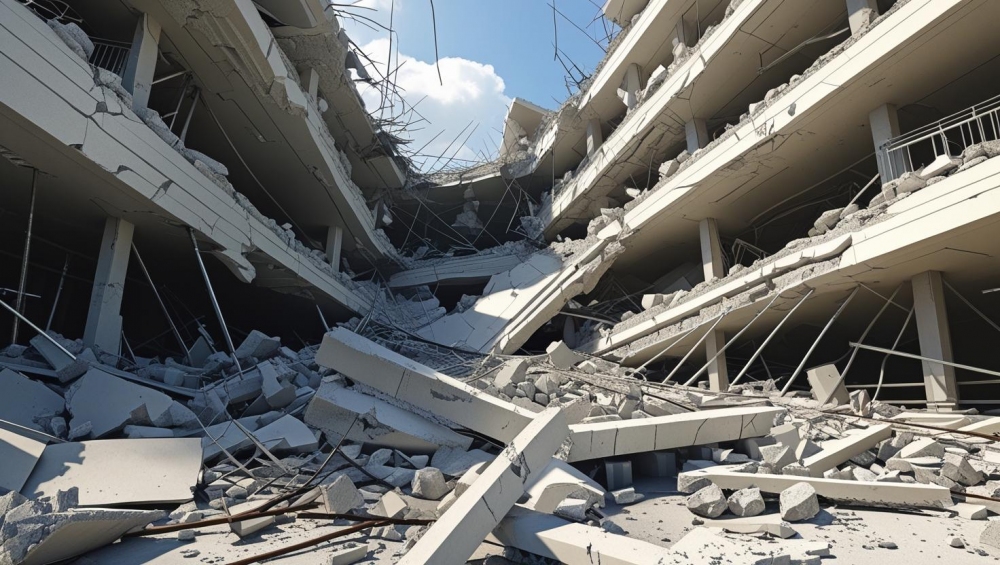
How to Determine If a Building Is Earthquake-Resistant? A Comprehensive Technical Guide
In earthquake-prone countries like Turkey, earthquake resistance of buildings is of vital importance. Ensuring a building remains structurally sound during seismic events not only saves lives but also minimizes financial losses. In this blog post, we’ll cover how to assess a building's earthquake safety, what technical criteria should be evaluated, methods for structural analysis and reinforcement, and practical guidance.
1. What Is Earthquake Resistance? Key Concepts
Earthquake resistance is the building's ability to withstand dynamic loads caused by seismic activity. Earthquakes subject buildings to both horizontal and vertical forces. A structure’s response depends on its mass, rigidity, and damping characteristics.
-
Ductile behavior: The ability of a structure to undergo large deformations without collapsing. Ductile buildings absorb and dissipate seismic energy.
-
Brittle behavior: Structures that fail suddenly and catastrophically. Brittle failures are dangerous and usually unacceptable in seismic zones.
2. Key Technical Criteria for Earthquake-Resistant Structures
2.1 Foundation and Basement Depth
Foundation depth plays a crucial role in integrating a building with the ground. If the foundation is too shallow, it becomes vulnerable to shear forces during seismic activity. Practical rule of thumb:
-
The basement height should be at least 15% of the total building height. For instance, a 20-meter-tall building should have a basement at least 3 meters deep.
-
The foundation concrete must comply with waterproofing standards and geotechnical study results.
Moist, unsealed basements can lead to corrosion of reinforcement bars, which significantly reduces the structural capacity of the building.
2.2 Concrete Quality and Reinforcement Standards
Concrete strength (compressive strength): A critical factor for the load-bearing system. In modern Turkish construction, concrete must be at least C25/C30 grade (according to EN standards). Ready-mixed concrete ensures uniformity and proper curing.
Reinforcement steel: Must comply with TS EN 10080 standards and possess high yield strength. Correct placement, spacing, and anchorage of rebars are essential for structural integrity, especially under lateral seismic loads.
2.3 Short Column Problem
Short columns typically occur on ground or basement levels due to window or door openings, reducing the effective height of columns. This causes:
-
Increased shear stiffness
-
Reduced energy dissipation
-
High risk of brittle failure
Short columns must be avoided or reinforced using advanced seismic retrofitting techniques.
2.4 Cantilever Elements and System Beams
Balconies and cantilevered structures create additional moments on load-bearing elements. System beams (transfer beams) must be used to distribute the loads from these overhangs to the main structure. Without proper design, these areas can suffer severe damage during seismic events.
3. Earthquake Codes and Structural Analysis Methods
3.1 Turkish Earthquake Code 2018 (TDY 2018)
All new buildings in Turkey must comply with TDY 2018, which outlines earthquake loading calculations, material requirements, and structural systems. It aligns with Eurocode and international standards.
3.2 Structural Analysis Techniques
-
Linear Static Analysis: Suitable for small or regular buildings. Assumes uniform lateral loads.
-
Linear Dynamic Analysis (Modal Analysis): Calculates natural frequencies and vibration modes, offering more accurate results.
-
Nonlinear Static Analysis (Pushover Analysis): Assesses the plastic deformation and energy dissipation capacity of the structure.
4. How to Evaluate Earthquake Safety in Existing Buildings
4.1 Visual Inspection
-
Cracks in concrete surfaces
-
Corroded reinforcement steel
-
Water leakage in basements
-
Visible deformation in beams or columns
4.2 Material Strength Testing
-
Concrete core samples tested for compressive strength in laboratories
-
Rebar testing for tensile strength and ductility
4.3 Structural Modeling and Simulation
-
Creating a 3D model of the building based on architectural and structural drawings
-
Performing dynamic simulations to assess earthquake performance
4.4 Soil-Structure Interaction and Geotechnical Survey
-
Soil type, bearing capacity, and liquefaction potential
-
How seismic waves propagate through site-specific soil layers
5. Seismic Retrofitting and Reinforcement Techniques
5.1 Carbon Fiber Reinforced Polymer (CFRP)
Wrapping structural members like columns and beams with CFRP improves tensile strength and ductility.
5.2 Steel Jacketing and Anchor Systems
Adding steel jackets and anchor bolts increases stiffness and redistributes loads during earthquakes.
5.3 Concrete Jacketing and Shear Walls
Increasing column and beam sizes with additional concrete or adding new shear walls improves lateral strength.
5.4 Foundation Strengthening
Includes deep foundation systems (piles), raft foundations, and soil stabilization to enhance substructure integrity.
6. What to Consider Before Buying or Renovating a Building?
-
Verify architectural and structural drawings
-
Check basement height and foundation design
-
Evaluate concrete and reinforcement quality
-
Get a professional structural engineering assessment
-
Inspect for short columns or unbalanced cantilevers
-
Review geotechnical reports and soil interaction studies
7. Frequently Asked Questions (FAQ)
Q: Can new buildings still be unsafe despite modern codes?
A: Yes, if constructed without proper inspection or with unapproved modifications.
Q: Is the number of floors a safety factor?
A: Not directly. Seismic resistance depends more on structural design and material quality.
Q: How is concrete strength tested?
A: Core samples are drilled and tested for compressive strength in certified laboratories.
8. Conclusion: Always Consult a Structural Engineer
Ensuring earthquake safety is a multi-layered process that involves proper design, material control, structural analysis, and site evaluation. A detailed inspection by licensed civil or structural engineers is crucial before purchasing or renovating a building in seismic zones.
Efil Construction is always by your side for professional service and technical support in this field.
With its expert team of engineers, up-to-date software tools, and extensive field experience, Efil İnşaat offers tailored solutions for every stage — from seismic resistance analysis of your existing structures to strengthening projects.
LATEST NEWS
-
 May 23, 2026
Soil Investigation
-
 April 30, 2026
What Is a Bored Pile?
-
 March 28, 2026
What is a Raft (Radye) Foundation?